


Why Choose Us
High quality
Our products are manufactured or executed to very high standards, using the finest materials and manufacturing processes.
Professional Team
Our professional team collaborate and communicate effectively with one another, and are committed to delivering high-quality results. They are capable of handling complex challenges and projects that require their specialized expertise and experience.
Rich experience
Dedicated to strict quality control and attentive customer service, our experienced staff is always available to discuss your requirements and ensure complete customer satisfaction.
24h online service
We try and respond to all concerns within 24 hours and our teams are always at your disposal in case of any emergencies.
What is Thermostatic Shower
A thermostatic shower is a shower system equipped with a thermostatic valve designed to maintain a constant water temperature. This valve regulates the water temperature by sensing the difference between the set temperature and the actual temperature of the water flowing through the valve. When the temperature deviates from the desired setting, the valve adjusts the hot and cold water mixtures to restore the pre-set temperature.


Thermostatic Shower has no alternate cooling and heating,High standard constant temperature and temperature control technology,38℃ safety lock to protect your family's shower safety.
What are the advantages of using a thermostatic shower

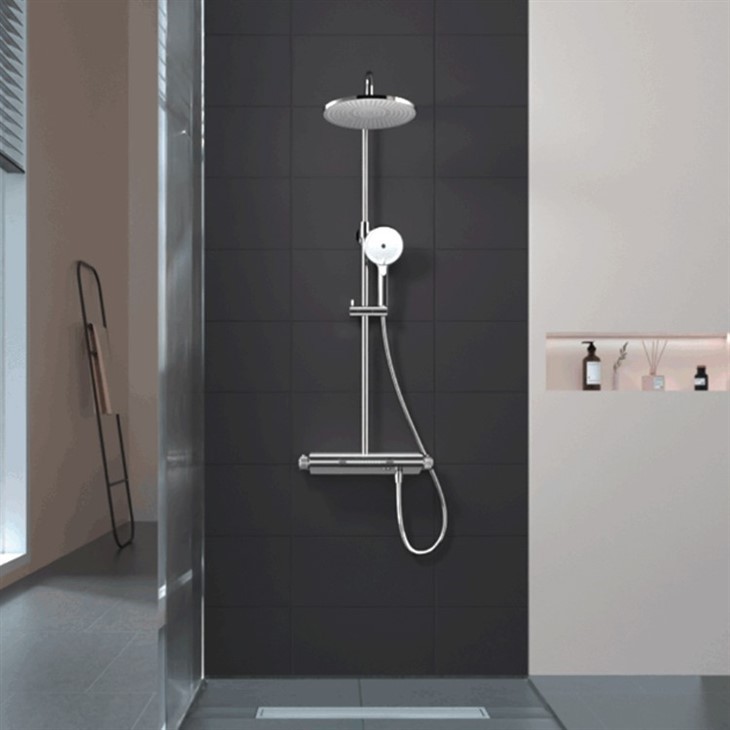


Consistent Temperature: The most significant benefit of a thermostatic shower is its ability to maintain a steady water temperature. This consistency is crucial for comfort and safety, especially in households with multiple water sources where a sudden change in water usage can affect water temperature.
Safety: Thermostatic showers have built-in safety features that prevent the water temperature from rising above a pre-set maximum level, reducing the risk of scalding accidents, which is particularly important for children and the elderly.
Ease of Use: With separate controls for temperature and flow, users can easily adjust their preferred settings without having to constantly fiddle with the knobs to maintain the right temperature.
Efficiency: Because the temperature is consistently maintained, users are less likely to let the water run while trying to find the right temperature, potentially saving water and energy.
Enhanced Experience: The stable and predictable temperature allows for a more enjoyable showering experience, as one can relax without worry of being startled by a sudden burst of hot or cold water.
Design Flexibility: Thermostatic shower systems can accommodate various shower configurations, including multiple outlets like overhead showers, handheld showers, and body jets, all while maintaining the set temperature when switching between them.
Increased Property Value: Installing a thermostatic shower can add value to a property by offering a luxurious and safe feature that is increasingly sought after by homebuyers.
Customization: Some thermostatic shower systems allow for customization, such as digital temperature displays, preset memory functions, and even smart home integration, further enhancing the user experience.

How does a thermostatic shower work
Temperature Regulation: If the incoming water temperature or the pressure changes—caused by someone turning on another tap in the house, for example—the temperature sensor responds immediately. The wax element or bimetallic strip expands or contracts in response to the temperature fluctuation.
Adjustment Mechanism: This expansion or contraction moves a piston or a series of gears within the valve, which in turn adjusts the proportion of hot and cold water entering the mixing chamber. If the water gets too hot, more cold water is allowed in; if it gets too cold, more hot water is added.
Maintaining Constant Temperature: The valve makes these adjustments almost instantaneously, keeping the shower water at the set temperature regardless of external changes in water pressure or temperature.
Temperature Sensing
Inside the thermostatic valve, there is a dual-sensor mechanism, typically consisting of a wax element or a bimetallic strip, that is highly sensitive to temperature changes.
Mixing Hot and Cold Water
The valve mixes hot and cold water in varying proportions based on the user's chosen temperature setting. When the shower is turned on, cold water enters the valve first and is then mixed with hot water until the desired temperature is reached.
Safety Features
Most thermostatic valves have a fail-safe mechanism that shuts off the hot water supply completely if the cold water fails or if the temperature rises above the maximum safe level, thus preventing scalding incidents.
User Interface
The user sets the desired temperature using a control knob or lever on the shower. Some advanced thermostatic showers may offer digital controls or touchscreen interfaces for more precise temperature setting and additional features.
Types of Thermostatic Shower
Panel Showers: These incorporate multiple shower outlets and are often part of a larger wet room design. They usually come with a thermostatic valve to control the temperature for the various spray heads and jets.
Digital Thermostatic Showers: These showers feature a digital interface that allows users to set the temperature precisely. They often include LED displays and may offer additional functionality such as preset shower modes or smart home integration.
Concealed Thermostatic Showers: The valve and plumbing are hidden behind the bathroom wall, giving a sleek and streamlined look. These showers require more upfront planning and installation but offer a clean appearance.
Visible Thermostatic Showers: In contrast to concealed showers, the valve and controls are mounted on the shower wall and are visible. They are easier to install and maintain but may not have the same aesthetic appeal as concealed designs.
Dual Control Thermostatic Showers: These showers have two separate controls, one for temperature and one for water flow, allowing for independent adjustment without affecting the other.
Single Lever Thermostatic Showers: With a single lever, users can control both temperature and flow simultaneously with one hand, offering simplicity and ease of use.
Recessed Thermostatic Showers: The valve is installed within the shower wall itself, creating a minimalist and integrated look. This type of installation requires cutting into the wall during construction or renovation.
Surface Mounted Thermostatic Showers: The valve is mounted onto the shower wall's surface, making it easier to install and replace compared to recessed models.
Slide Rail Showers: These showers have a movable shower head on a rail, and the thermostatic valve controls the temperature for this adjustable setup.
Body Spray Thermostatic Showers: Designed for those who enjoy a full-body spray experience, these showers include multiple body jets in addition to a traditional showerhead. A thermostatic valve ensures that the temperature remains constant across all outlets.
Thermostatic showers are typically made from a combination of materials designed to withstand the high temperatures and pressures of hot water, as well as the daily wear and tear of regular use. The primary materials used in the construction of thermostatic showers include:
Bronze: Bronze is a popular choice due to its durability, resistance to corrosion, and aesthetic appeal. It is often used for the body of the valve, handles, and fittings. High-quality bronze components can last many years without significant wear.
Stainless Steel: Stainless steel is known for its strength and corrosion resistance. It is commonly used for the internal parts of the valve where it comes into contact with water. Stainless steel is also used for the visible parts of the shower due to its modern and sleek look.
Brass: Brass is a common material for valves and fittings because of its excellent machinability, corrosion resistance, and ability to be plated with various finishes like chrome or nickel. Brass components can provide a high-quality appearance and long service life.
Ceramic Cartridge: The ceramic disc cartridge is a critical component inside the thermostatic valve. Ceramic is used because of its hardness and smoothness, which allows for precise temperature and flow regulation. Ceramic cartridges can withstand high temperatures and resist scale buildup.
Plastics and Rubber: Certain parts of the shower, such as washers and gaskets, are made from rubber or other plastics. These materials are chosen for their flexibility, sealing properties, and ability to withstand water exposure without corroding.
Vitreous China: For showerheads and fixtures, vitreous china (a type of glazed ceramic) is used because it is non-porous, easy to clean, and resistant to staining and bacteria growth.
Glass: Glass is often used for shower doors and panels. It provides a clear and elegant look while being durable when properly treated and reinforced.
Zinc Alloys: Zinc alloys are sometimes used for die-cast parts due to their casting characteristics and mechanical properties. They can be finished with a variety of coatings to enhance appearance and protect against corrosion.
How to Fit a Thermostatic Shower
Step one: Turn off your stopcock
No matter where your starting point is (you may already have a mixer shower and separate pipes for a shower), you will need to turn off your stopcock to isolate the water supply and drain the water from your pipes.
Step two: decide where to take your hot and cold water from
If you are fitting the thermostatic shower above a bath, then you will be able to tap (or tee) into the tap water supplies. However, if you are installing a thermostatic shower in a shower cubicle or enclosure, you can tee into the nearest piping, which is often under your flooring.
Step three: Run the hot and cold water pipes towards the shower
Once you’ve tapped into the water supply and turned off the water, you’ll need to run the pipework toward the shower. Make sure you check your thermostatic valve instructions to ensure the hot and cold water supplies are on the correct sides (hot is usually on the left).
Plastic piping can be easier to work with and may be run under your floorboards and up behind stud walls. To prevent plastic pipes from deforming through use or heat, use pipe inserts at any joints.
Include a shut-off valve on your hot and cold pipes as close to the shower as possible. It can be easier to tighten compression joints on copper piping than plastic, so try inserting some copper pipe at the end of the plastic.
Switch the water supply back on to check for any possible leaks and put plastic pipe covers - or stop ends - over the ends of the piping.
Step four: Flush the piping
Thermostatic shower valves can be damaged by any dirt that is in the water flowing through it, so be sure to flush your new pipework. You can do this while checking for any leaks by removing the stop ends from your pipes and running water through them, then simply hold a bucket underneath the pipes to catch any dirt. Be sure to switch the water supply off via your stopcock once you’re done.
Step five: mark and cut your pipes
Get your thermostatic valve and hold it next to your outlet pipes flat against the wall. Then, with a pencil, mark the amount of pipe that’s needed to allow the valve to sit flush against the shower wall (this is best done before installing tiles or bathroom wall panels). Once this is complete, cut the excess piping. You can use a saw or a tubing/pipe cutter for this.
Step six: drilling time
After you’ve cut your pipes, you can drill the holes to attach the thermostatic valve. Mark where the valve will sit and the screw points, and then you drill the holes. We suggest using a diamond-tipped drill head, as it will work best on walls and tiles.
Step seven: Fit a compression olive
To ensure a water-tight seal in the thermostatic valve, place a compression olive (sometimes called a collapsible olive) in each valve inlet and secure it in position by screwing the retaining nut with one turn.
Step eight: Align the thermostatic valve
Now for the main event - attaching the thermostatic valve! Align the valve with the hot and cold pipes. Then, make sure they fully slide into the pipes. Screw your shower valve onto the wall and tighten the retaining nuts, this is best done with an adjustable spanner. Turn the water supply back on via the stopcock to check for any possible leaks at the inlet.
Step nine: Fit the rest of your shower
Once the valve is fitted, you can install the rest of your shower, including the riser pipe or hose, and your shower head or handset.
Factors to consider when purchasing Thermostatic Shower


Safety Features: Check for a pressure-balanced or temperature-controlled cartridge that can quickly react to changes in water pressure or temperature to prevent scalding.
Temperature Limit Settings: Some thermostatic showers allow you to set a maximum temperature to avoid accidentally setting the water too hot, adding an extra layer of safety.
Certifications and Standards: Look for products that meet industry standards and certifications, such as those from the National Sanitation Foundation (NSF), Underwriters Laboratories (UL), or WaterMark in Australia.
Material Quality: Consider the materials used for the valve body, handle, and other components. High-quality materials like brass or stainless steel with durable finishes will last longer and maintain their appearance.
Installation Type: Decide whether you want a concealed or exposed valve based on your bathroom design preferences and the existing plumbing infrastructure. Concealed installations offer a cleaner look but are more complex to install.
Flow Rate and Water Pressure Compatibility: Ensure the shower can handle your home's water pressure and that it has an appropriate flow rate to meet your needs without wasting water.
Ease of Use: Look for ergonomic designs with controls that are easy to operate, especially if you plan on using the shower daily. Single-lever controls are generally simpler to use than dual or multi-control systems.
Maintenance and Service: Consider how easy it is to maintain the shower and whether replacement parts are readily available. Some brands offer limited warranties or maintenance services.
Aesthetics: Choose a style that complements your bathroom's decor, including the finish (chrome, brushed nickel, oil-rubbed bronze, etc.).
Additional Features: Some thermostatic showers come with added features such as adjustable spray settings, body jets, or integrated lighting. Determine which features are important to you and fit within your budget.
Budget: Set a budget that accounts for the initial purchase price as well as any potential long-term costs related to maintenance, repairs, or energy efficiency.
Brand Reputation: Research the brand's reputation for quality, customer service, and product reliability. Well-known brands often provide better support and warranty options.
Installation Costs: If you're not doing the installation yourself, factor in the cost of professional installation, which can vary depending on the complexity of the job and labor rates in your area.
Our campany traces its roots to an enterprise specialized in industrial design, founded in 2010. We are vice president company of Fujian Industrial Design Association, enterprise with an advantage of IPRS, practice base of industrial design FuZhou University Xiamen Academy of Arts and Design and Xiamen University of Technology.


FAQ
We're well-known as one of the leading thermostatic shower manufacturers and suppliers in China. Please rest assured to buy high quality thermostatic shower at competitive price from our factory. For customized service, contact us now.
touch kitchen faucet pull down sprayer, black wall mounted waterfall tap, elegant kitchen faucets