


What is Faucets
Faucets are plumbing fixtures that provide a controlled flow of water for washing, drinking, and other uses. They are typically installed in sinks, tubs, and showers and are available in various styles and finishes to match a range of décor preferences. Some faucets also include features such as temperature control, motion sensors, and water conservation technology.
Advantages of Faucets
Easy to use
Faucets are simple to use; just turn a handle or push a button, and water flows out. There's no need to operate complex machinery or wait for the water to heat up.
Saves water
Most faucets today come with water-saving features that help reduce water consumption and save money on utility bills. Some of these features include aerators, low flow rates, and motion sensors that turn off the water when you're not using it.
Easy to install
Faucets are relatively easy to install, and in many cases, the job can be done without the need for professional assistance.
Easy to clean
Faucets can be easily wiped clean with soap and water or a mild detergent. Some newer models even have a self-cleaning mechanism that helps keep them free of germs and bacteria.


Faucets for basin or for kitchen, pull out or traditional, brass or stainless, check with our sales
Why Choose Us

High quality
Our products are manufactured or executed to very high standards, using the finest materials and manufacturing processes.

Professional Team
Effectively with one another, and are committed to delivering high-quality results. They are capable of handling complex challenges and projects that require their specialized expertise and experience.

Rich experience
Dedicated to strict quality control and attentive customer service, our experienced staff is always available to discuss your requirements and ensure complete customer satisfaction.

24h online service
We try and respond to all concerns within 24 hours and our teams are always at your disposal in case of any emergencies.
Types of Faucets
1.Compression faucets
These are a traditional style of faucet typically found in older homes. Compression faucets have separate handles for cold and hot water – each of which needs to be manually rotated to control water flow, similar to turning on a hose.
2.Disc faucets
Disc faucets do not rely on washers and are therefore more durable and require less repair in general than compression faucets. Disc faucets contain a handle that moves up and down and side to side. When the handle is up, the water flows by creating a gap between the upper disc of the faucet and the lower disc.
3.Ball faucets
Similar to a disc faucet, ball faucets do not require washers.These faucets are commonly found in kitchen sinks, and feature a handle that moves relatively freely up and down and side to side.The water flow and temperature are reliant on the position of the handle.
4.Cartridge faucets
Cartridge faucets are a bit trickier to distinguish since they can have either one or two handles. In this case, they are similar to compression faucets, but they differ in that you don’t need to rotate the handles to control water flow. Cartridge faucet handles with two handles rotate from off to on in one motion, while single-handle faucets move up and down for flow and side-to-side for temperature, similar to disc faucets.

Pure brass ingot or virgin brass is one of the most widely used raw materials for Faucet manufacturing. With the different trends in the market, some brass faucets are chrome plated to give them that silver glossy look, while others are left in their original colour give that traditional aesthetic.
Application of Faucets
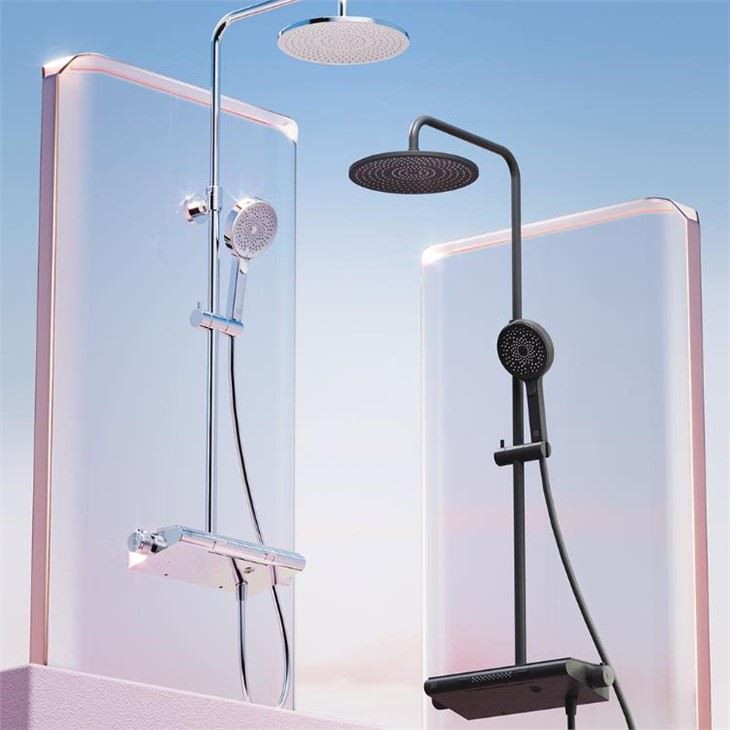
01
Washing
Faucets are commonly used for washing hands, face, and dishes. They provide a convenient source of water for cleaning and maintaining personal hygiene.

02
Medical facilities
Faucets in hospitals and medical facilities are designed to prevent the spread of infections. They are typically touch-free to minimize the spread of germs.
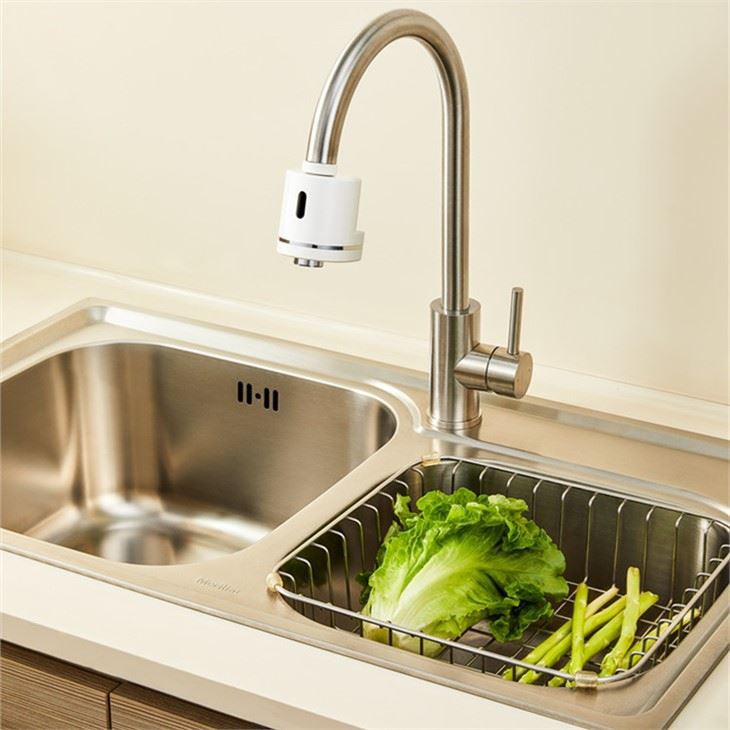
03
Laboratory applications
In laboratories, faucets are used to control the flow of water for experiments, cleaning equipment, and other applications.
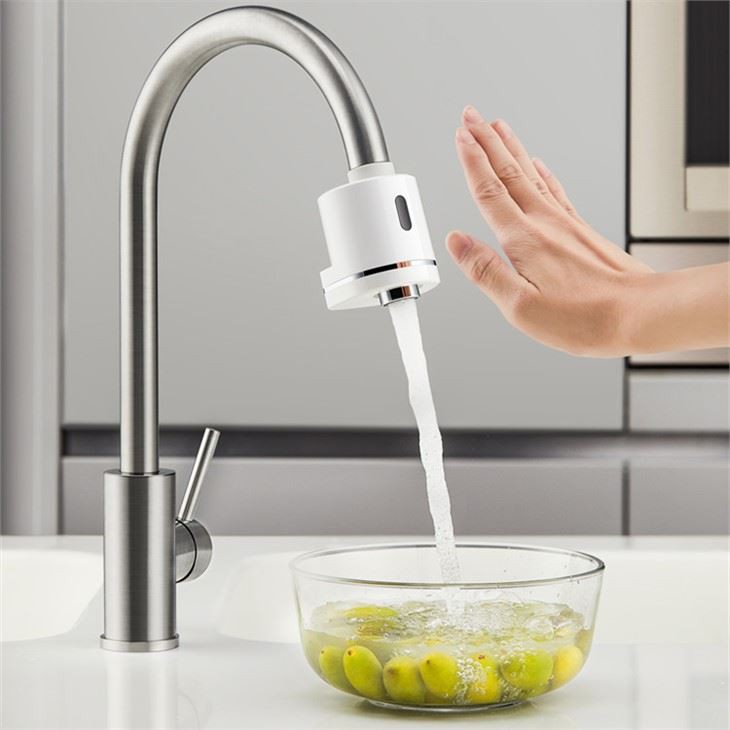
04
Industrial usage
Faucets are used in factories and production facilities to control the flow of water for manufacturing, cleaning machinery, and other applications.
Components of Faucets
Aerators
A round device that’s small and is screwed inside the faucet’s tip is known as an Aerator. The primary function of faucet aerators is to generate a splash-free flow of water, which is more consistent compared to faucets without aerators. This is achieved by perfectly mixing air and water in a way that the water flow level is optimum and the stream of water is also much smoother.
01
Spouts
The main function of a faucet spout is to ensure seamless water delivery to the sink from the body of the faucet. In case of pull down or pull out faucets, you will observe that the nozzle head can be extended to an extent that it faces a direction that’s away from the body of the faucet, in order to have more reach.
02
Handle
A faucet handle’s purpose is to act as an On/Off mechanism for the faucet. Apart from turning the faucet on or off, another crucial function of the handle is to control the temperature of water that flows through the faucet. The faucet handle does so by closing and opening the valve!
03
Cartridge
The cartridge is a metallic or plastic piece that’s found within your faucet and it internally controls the flow quality of the water, as well as the temperature. The more urban and better quality cartridges are built out of ceramic. It’s a fact that such cartridges are highly unlikely to leak and are not adversely impacted by deposits of hard water.
04
Body
The body is the part of the faucet where the blending/mixing process of hot and cold water takes place. Generally, single and double handled faucets have a combination of hot and cold water in a single casting itself, which also contains the valves of the cartridge. Should your faucet have a wider than usual body, it will require three holes in order to be installed properly.
05
Maintenance of Faucets
Most faucets need little care and maintenance on a day-to-day basis. Cleaning your faucet with a damp cloth and a mild cleanser, followed by drying with a soft cloth is normally all you need. In many cases, window cleaner can be used on faucets as well.
If you live in an area with hard water, you have additional cleaning challenges. The high mineral content of hard water often leaves lime deposits on your faucets and fixtures. They can be stubborn and difficult to remove. Window cleaner or a mild abrasive scrub will often do the trick. You can also try using vinegar. It works well and is a more environmentally-friendly option.
Aerators are also an important feature in faucet maintenance. An aerator mixes water and air to ensure a smooth flow from the faucet. It consists of a housing, screen insert and rubber washer. We often ignore aerators, but they are subject to the same mineral and debris build up as the outer housing of a faucet.
Other than regular cleaning and aerator maintenance, your faucet should be relatively trouble free. However, there are some other minor items you may wish to keep in mind. Small components like springs and seats are subject to normal wear and tear and may need replacement throughout your faucet’s life.
Choose the material
Faucets are typically made from a variety of materials, including brass, chrome, and stainless steel. Brass is a durable and long-lasting material that is often used in high-end faucets. Chrome and stainless steel are also popular materials for faucets, as they are resistant to stains and corrosion.
Consider the style
Faucets come in a variety of styles, including traditional, contemporary, and transitional. Consider the overall design of your bathroom and choose a faucet that complements your style.
Consider the functionality
Faucets can come with a variety of features, such as dual-lever handles, touchless activation, and built-in water filters. Consider the functionality that you want in your faucet and choose a model that meets your needs.
Look for quality
High-quality faucets are made from top-grade materials and feature precision-crafted parts. Look for faucets that are backed by a good warranty and come from a reputable manufacturer to ensure you're getting a durable and long-lasting product.
Process of Choose Faucets
Design and manufacturing
The process of making a faucet typically begins with designing the product. This involves creating a blueprint of the faucet's structure and features. After designing the faucet, it's then manufactured by casting, forging, or other methods.
Assembly and quality check
Once the faucet is manufactured, it's put together and checked for quality. This includes checking the fit and finish of the faucet, as well as ensuring that all parts are properly installed and functioning correctly.
Packaging and shipping
After the quality check, the faucet is packaged and shipped to the store or distributor. The packaging is designed to protect the faucet during transit and ensure it arrives in good condition.
Installation and use
The faucet is then installed in the bathroom or kitchen and used for its intended purpose. The installation process typically involves attaching the faucet to the sink or tub and connecting the water supply lines.
Handle control
Make sure you know how to properly use the handle controls on your faucet. In most cases, the handle should be turned to the left for hot water and to the right for cold water. However, some faucets may have different designs, so check the manufacturer's instructions or your homeowner's manual for specific guidelines.
Water pressure
The amount of water pressure coming out of your faucet can vary depending on the type of faucet you have and the water supply in your area. If the water pressure is too weak, you may not be able to wash effectively. If the water pressure is too strong, it could damage the faucet or nearby surfaces.
Water conservation
Many faucets have water-saving features that allow you to conserve water. Look for faucets with low-flow aerators that reduce the amount of water used per minute. You can also adjust the water flow by turning the handle clockwise or counterclockwise to reduce the amount of water coming out.
Cleanliness
Maintaining the cleanliness of your faucet is important for preventing the spread of germs and maintaining good hygiene. Regularly clean your faucet with a disinfectant or a mild detergent solution. Make sure to clean the faucet handle, knobs, and spouts thoroughly to remove any buildup or residue.
When you turn the faucet handle, it rotates a valve inside the piping system. This valve controls the flow of water by opening or closing a pathway for the water to flow through. The water pressure pushing against the valve determines the amount of water that flows out. The higher the water pressure, the more water flows out of the faucet. The lower the water pressure, the less water flows out. The water temperature is controlled by the heating or cooling element in the faucet. When you turn the handle to the hot or cold side, the element heats or cools the water to the temperature you set.

FAQ
We're well-known as one of the leading faucets manufacturers and suppliers in China. Please rest assured to buy high quality faucets at competitive price from our factory. For customized service, contact us now.
rated motion sensor kitchen faucet, waterfall wash basin taps, white bathrooms with black fixtures